

Losing someone you love changes your brain — not just your mood. Brain scans of grieving people show real, measurable activity in the same reward and pain circuits that light up during addiction. That overlap is at the heart of why does grief cause substance abuse for so many people: the brain, desperate to numb pain or recreate the feeling of connection, can turn to alcohol or drugs as a shortcut to relief.
This guide breaks down the neuroscience of grief in plain language, explains why does grief cause substance abuse in some people and not others, and offers healthier paths through mourning — without judgment, and with real, practical help.
What Happens to the Brain During Grief
Grief is not only an emotional experience — it’s a biological one. According to Wikipedia’s overview of grief, grief is a multifaceted response to loss that involves emotional, cognitive, behavioral, and physical dimensions. Neuroscience research over the last two decades has mapped out what that response actually looks like inside the brain.
Here’s what changes when we grieve:
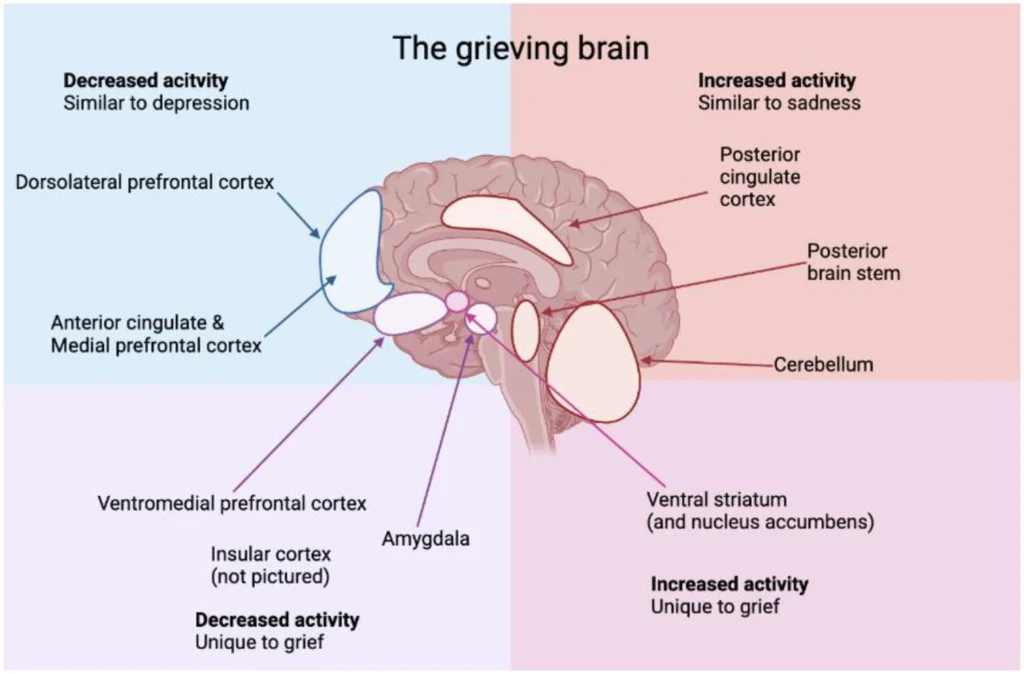
- The nucleus accumbens (reward center) activates. Researchers at UCLA found that when bereaved people looked at photos of their deceased loved one, their nucleus accumbens — the same brain region that lights up during drug cravings — became active. Grief researcher Mary-Frances O’Connor has described this as the brain “craving” the person who is gone, using the same neural machinery it uses to crave any powerful reward.
- The pain network fires up. The dorsal anterior cingulate cortex and insula, regions tied to both physical and social pain, activate during grief — which is why heartbreak can feel physically painful.
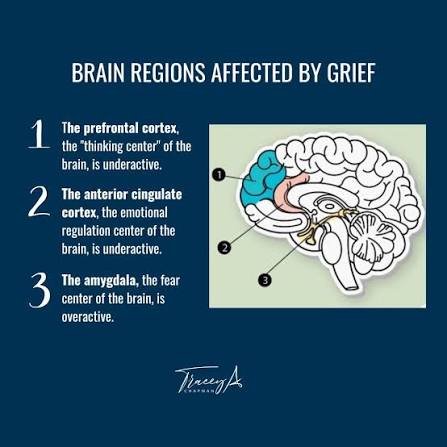
- The amygdala goes into overdrive. This heightens fear, anxiety, and emotional reactivity, making everyday stress feel bigger than it normally would.
- Cortisol (the stress hormone) rises. Chronic grief can keep the body in a prolonged stress response, disrupting sleep, appetite, immune function, and concentration.
- The prefrontal cortex — your brain’s “brakes” — can underperform. This area normally helps regulate emotion and impulse control. Under the weight of grief, it can become less effective, making risky coping behaviors (like reaching for a drink) easier to justify in the moment.
This combination — a hyperactive reward and pain system paired with weakened impulse control — creates fertile ground for the question so many people quietly ask themselves during bereavement: why does grief cause substance abuse to feel like relief, even when it isn’t?
Why Does Grief Cause Substance Abuse?
At its core, the answer to why does grief cause substance abuse comes down to the brain’s attempt to solve an unsolvable problem: it wants the pain to stop and the person back, and neither is fully possible. Drugs and alcohol offer a fast, chemical shortcut that mimics relief.
Several overlapping mechanisms explain why does grief cause substance abuse:
- Self-medication. Alcohol and certain drugs temporarily dull emotional and even physical pain by acting on the same neurotransmitter systems (dopamine, endorphins, GABA) that grief disrupts. This is often called the “self-medication hypothesis,” and researchers have found it’s a common pattern after sudden or traumatic loss.
- Numbing unbearable emotions. Grief can bring waves of guilt, anger, panic, or emptiness that feel too intense to sit with. Substances offer a way to mute those waves, even temporarily.
- Disrupted sleep and routine. Grief frequently wrecks sleep patterns. People who can’t sleep may turn to alcohol or sedatives to force rest, or stimulants to get through exhausted days.
- Social withdrawal and isolation. Loss often shrinks a person’s support network, especially if the relationship was central to their daily life. Isolation increases the likelihood of using substances alone and unnoticed.
- Pre-existing vulnerability. People with a personal or family history of substance use, unresolved trauma, or a prior mental health condition are statistically more likely to misuse substances after a loss.
The Science Behind Why Does Grief Cause Substance Abuse
The clearest scientific explanation for why does grief cause substance abuse lies in how similar grief and addiction look on a brain scan. Both conditions involve the nucleus accumbens and orbitofrontal cortex — regions responsible for craving, motivation, and reward-seeking. In prolonged or complicated grief specifically, researchers have found heightened nucleus accumbens activity that closely resembles the craving patterns seen in substance use disorders. In other words, grief can create an addiction-like craving for a person, and drugs or alcohol can hijack that same craving circuitry, offering a temporary — and ultimately hollow — substitute for connection.
This is also why grief-related substance use so often escalates quietly. The brain isn’t chasing a “high” in the way most people imagine addiction; it’s chasing relief from an ache that feels unbearable, which can make the behavior feel more justifiable and harder to recognize as a problem.
Why Does Grief Cause Substance Abuse in Some People More Than Others?
Not everyone who grieves turns to substances, and understanding why does grief cause substance abuse more heavily in certain individuals comes down to risk factors:
- Sudden, violent, or traumatic loss (accident, overdose, suicide, homicide) carries a significantly higher risk of increased substance use than an anticipated death.
- History of substance use or addiction, even if it was previously under control.
- Limited social support or estrangement from family and friends.
- Co-occurring mental health conditions, such as depression, anxiety, or PTSD.
- Complicated or prolonged grief disorder, where yearning and craving for the deceased remain intense well beyond the typical adjustment period.
- Cultural or family norms around using alcohol to cope with hardship or “toast” a loss.
- Genetic predisposition to addiction, which can lower the threshold at which substance use turns into substance use disorder.
Research on young bereaved adults found that many describe a genuine spike in drinking or drug use shortly after a sudden loss, often as a deliberate attempt to self-medicate grief-related distress — and for some, that spike doesn’t fade on its own.

Signs Grief Is Turning Into Substance Misuse
It’s not always obvious when coping tips into a problem. Watch for:
- Drinking or using drugs alone, especially at unusual times of day
- Needing more of a substance to feel the same relief
- Missing work, appointments, or responsibilities because of use
- Using substances to fall asleep every night
- Irritability or anxiety when the substance isn’t available
- Loved ones expressing concern about changes in behavior
- Feeling unable to face grief-related emotions without using first
If several of these sound familiar, it may be worth exploring why does grief cause substance abuse in your own life with a grief counselor or addiction specialist — not as a judgment, but as a first step toward relief that actually lasts.
Healthy Ways to Cope With Grief Without Substances
The good news: the same brain circuitry that makes grief painful is also capable of healing. Healthier coping strategies help regulate the nervous system without the risks that come with substance use.
- Grief counseling or therapy, especially approaches like Complicated Grief Treatment or CBT, which have been shown to calm the same reward-craving circuits activated during grief
- Peer support groups, in person or online, where you can talk with others who understand grief-related cravings and urges
- Physical movement, such as walking, yoga, or light exercise, to lower cortisol and support sleep
- Journaling or rituals of remembrance, which give the “craving” for the deceased a healthy outlet
- Structured routines, including regular sleep and meals, to reduce the chaos that often fuels substance use
- Mindfulness or breathing techniques, to help the prefrontal cortex regain some control over impulsive urges
For a deeper, step-by-step guide to processing loss in healthy ways, see our related article on coping strategies for grief and emotional healing
When to Seek Professional Help
Reach out to a doctor, therapist, or addiction specialist if:
- Substance use is increasing in frequency or amount
- You’ve tried to cut back and couldn’t
- Substance use is affecting work, relationships, or safety
- You’re using substances to avoid grief entirely rather than process it
- You have thoughts of self-harm or feel unable to cope
Many treatment centers now offer dual-diagnosis care, treating grief (including complicated or prolonged grief disorder) and substance use disorder together, since treating one without the other often leads to relapse. Understanding why does grief cause substance abuse on a biological level can also help reduce the shame that often keeps people from asking for help — this is a brain response to pain, not a character flaw.
If you or someone you know is struggling with substance use or thoughts of self-harm, contact the SAMHSA National Helpline at 1-800-662-4357 (free, confidential, 24/7) or the 988 Suicide & Crisis Lifeline by calling or texting 988.
Community Voices: How Others Have Coped
We invite readers to share their own experiences in the comments below — how did you notice grief affecting your relationship with alcohol or drugs, and what helped you find healthier coping tools? Your story could be exactly what another grieving reader needs to read today.
“I didn’t realize how much I was using wine to avoid feeling anything after my mom passed until a friend gently pointed it out. Therapy helped me understand the connection between grief and my drinking — once I understood the ‘why,’ it was easier to choose something else.” — Reader submission
Frequently Asked Questions
Why does grief cause substance abuse?
Grief activates the same reward and pain circuits in the brain — particularly the nucleus accumbens — that are involved in cravings and addiction. Combined with emotional pain, disrupted sleep, and reduced impulse control, this makes substances feel like a fast source of relief, which is why grief cause substance abuse in a meaningful share of bereaved individuals, especially after sudden or traumatic loss.
Is it normal to drink more after losing a loved one?
A temporary increase in alcohol use after a loss is common and, for many people, fades on its own within weeks. However, if drinking continues to escalate, becomes a daily coping tool, or starts to interfere with daily functioning, it’s worth speaking with a grief counselor or doctor before it develops into a longer-term pattern.
How long does grief-related substance use typically last?
For many people, increased substance use after a loss is short-lived — often described as a “spike” in the weeks immediately following the death. For others, especially those with prolonged or complicated grief, substance use can persist for months or years without intervention, which is part of why understanding why does grief cause substance abuse matters for early prevention.
Can therapy help with grief-related substance abuse?
Yes. Grief-focused therapies, including Complicated Grief Treatment and cognitive behavioral therapy, have been shown to reduce the reward-circuit activity linked to intense yearning, while addiction counseling addresses the substance use itself. Many treatment centers offer combined (dual-diagnosis) programs for exactly this overlap.
What’s the difference between normal grief and complicated grief?
Normal grief tends to soften gradually over time as the brain adjusts to the loss. Complicated grief (also called prolonged grief disorder) involves intense yearning, longing, and functional impairment that persists for six months or longer without improvement — and it’s strongly linked to higher rates of substance misuse.
