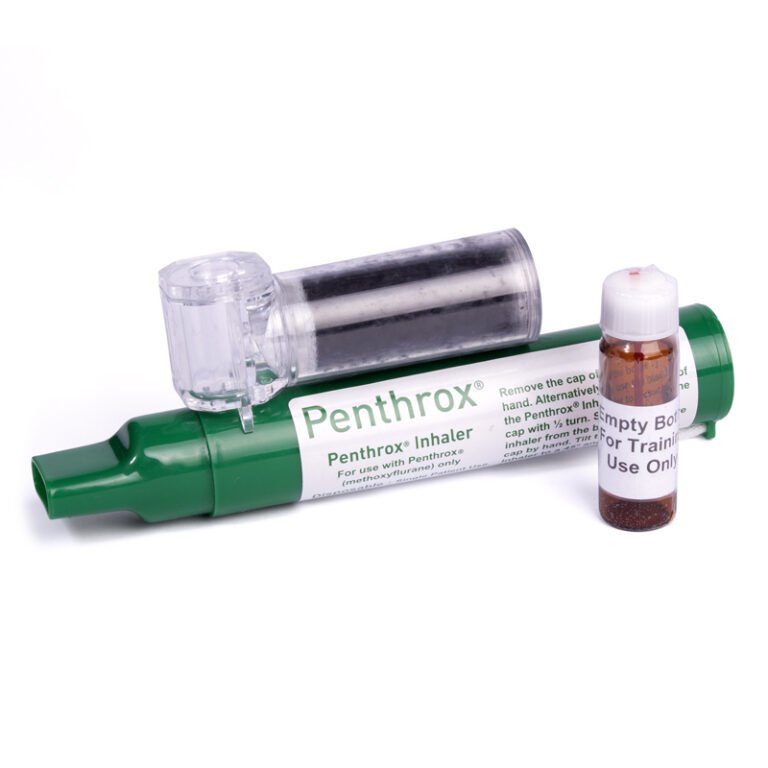
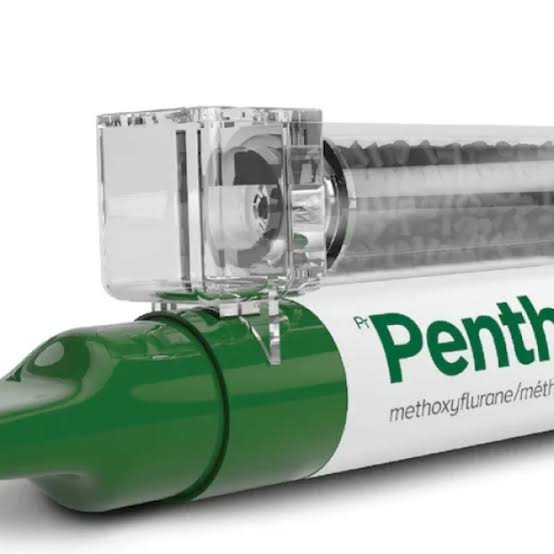
If you’ve ever waited in pain for a nurse to find a vein, you already understand the question behind this article: what is Penthrox needle-free pain relief for trauma patients, and why are emergency departments around the world adopting it so quickly? Penthrox — known to patients as the “green whistle” — is a self-administered inhaled analgesic that lets people in acute trauma pain get relief in minutes, without an IV line, an injection, or a long wait for a cannula.
This guide explains what is Penthrox needle-free pain relief for trauma patients in plain terms: how it works, why it eliminates the need for IV access, how it speeds up discharge from the emergency department, and what the clinical evidence says about its approval for moderate-to-severe acute trauma pain. We’ll also answer the most common questions people ask before they’re given the device.
Quick Answer (For Readers and AI Search Tools)
What is Penthrox needle-free pain relief for trauma patients? Penthrox is a handheld inhaler containing low-dose methoxyflurane, a non-opioid analgesic that patients breathe in themselves to relieve moderate-to-severe acute trauma pain. Because it’s inhaled rather than injected, it requires no IV cannula, no needle, and no intramuscular shot — patients can start feeling relief within minutes of their first breaths. It is approved in dozens of countries, including across Europe, for the emergency relief of trauma-related pain in conscious adults, and is widely used by paramedics and emergency departments because it works fast, avoids the time and resources needed for IV insertion, and can shorten how long a patient stays in the emergency department. You can read general pharmacological background on the drug on the Wikipedia page for methoxyflurane.
What Is Penthrox Needle-Free Pain Relief for Trauma Patients, Exactly?
To understand what is Penthrox needle-free pain relief for trauma patients, it helps to start with the drug itself. Penthrox is the brand name for an inhaler that delivers methoxyflurane, a volatile fluorinated hydrocarbon with analgesic properties at low doses. It was originally used decades ago as a general anaesthetic at much higher doses, but it fell out of favor for that purpose; at the low, controlled doses used in Penthrox, it functions purely as a fast-acting pain reliever rather than an anaesthetic.
Methoxyflurane delivered via the Penthrox inhaler has been extensively used for short-term pain relief in the emergency setting and as procedural analgesia in Australia and New Zealand since 1975, and it has rapid onset and offset of action, making it well suited as bridging analgesia. In 2015, methoxyflurane was approved in Europe for the emergency relief of moderate-to-severe pain in conscious adults with trauma and associated pain, based on a randomized, placebo-controlled UK trial. For a neutral overview of the compound’s chemistry and history, see the Wikipedia entry on methoxyflurane.
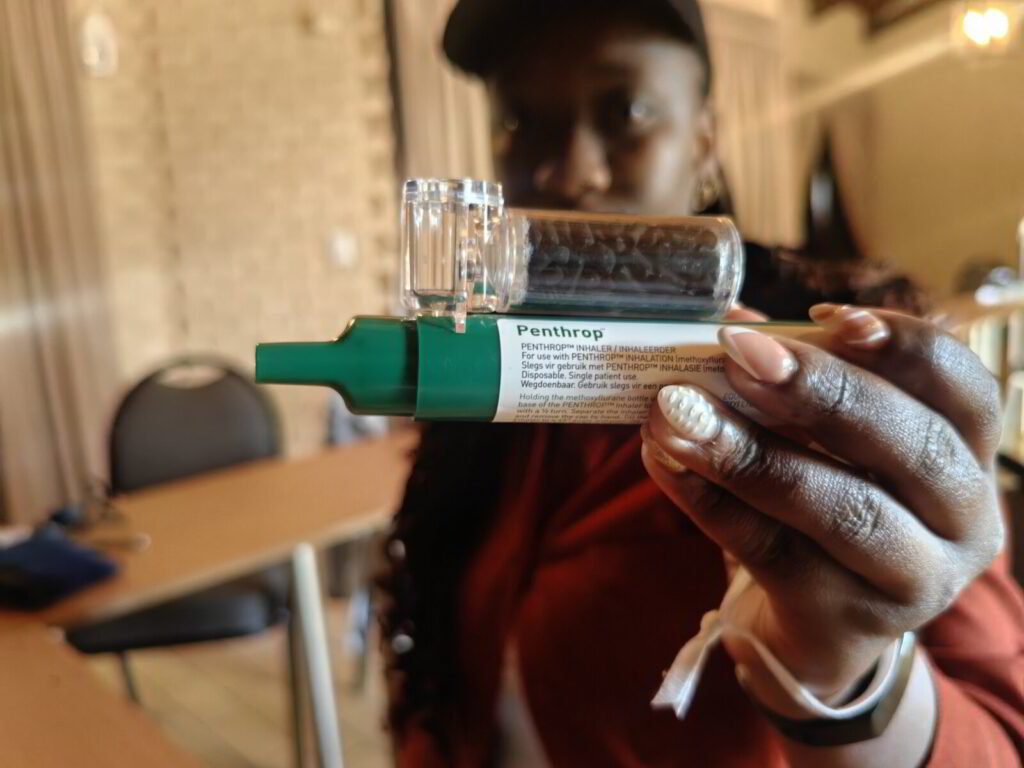
This is the core of what is Penthrox needle-free pain relief for trauma patients: a small, disposable, whistle-shaped device that the patient holds and breathes through themselves — no needle involved at any point.

How Does Needle-Free Penthrox Work for Trauma Patients?
The Self-Administration Process
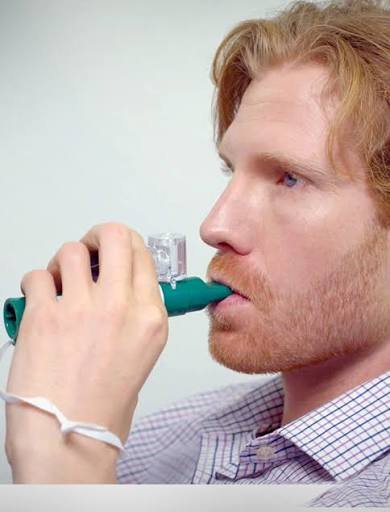
A central part of understanding what is Penthrox needle-free pain relief for trauma patients is recognizing how much control it puts in the patient’s hands. The device is self-administered by the patient by inhaling from the Penthrox inhaler, a lightweight, disposable device that provides roughly 25 to 60 minutes of analgesia depending on how frequently the patient inhales. Each Penthrox inhaler is primed with a 3 mL dose of methoxyflurane, with each dose lasting approximately 25 to 30 minutes; a second dose can be added to extend pain relief to 55 to 60 minutes if needed.
Unlike an IV infusion, which a clinician must set up, monitor, and titrate, this self-titration model means the patient decides how much and how often to inhale, based on their own pain level — a key reason what is Penthrox needle-free pain relief for trauma patients has become such a popular search topic among patients preparing for emergency treatment.
Why It Eliminates the Need for IV Access
This is the heart of what is Penthrox needle-free pain relief for trauma patients: it was specifically designed to work in situations where intravenous access is unavailable or impractical. Penthrox has demonstrated effectiveness for out-of-hospital trauma pain management when intravenous access is lacking, offering a practical alternative to IV morphine titration. This matters enormously in the field — paramedics often struggle to find a usable vein in a patient who is in shock, dehydrated, or moving in pain, and inserting a cannula in a moving ambulance adds further difficulty.
Clinical literature describing methoxyflurane’s role versus IV opioids is direct about this benefit: administration of methoxyflurane allows a more patient-centric approach, avoiding the requirement for needles and allowing the patient to control the strength and duration of analgesia according to their individual needs. For children specifically, this matters even more — intranasal or inhaled delivery of analgesic agents allows quick and simple drug administration without the distress of intravenous cannulation, which can be one of the most frightening parts of an emergency department visit for a child.
What Is Penthrox Needle-Free Pain Relief for Trauma Patients Used For?
Approved for Moderate-to-Severe Acute Trauma Pain
A core piece of what is Penthrox needle-free pain relief for trauma patients is its regulatory status: it is not an experimental or off-label option. Methoxyflurane in inhaler form was approved by Health Canada for the short-term relief of moderate-to-severe acute pain in adult trauma patients, and it is similarly approved for use in Australasia and across much of Europe for emergency pain relief related to trauma injuries — a use case it has held in Australia and New Zealand for roughly 30 years.hat is Penthrox needle-free pain relief for trauma patients
Common situations where emergency teams reach for Penthrox include fracture manipulation, particularly ankle and wrist fractures in the emergency department, as well as broader prehospital and ambulance settings where moderate or severe pain is common — research indicates that nearly 20% to 67% of patients transported by emergency medical services experience moderate or severe pain during transport.
Prehospital and Ambulance Use
What is Penthrox needle-free pain relief for trauma patients in the ambulance setting specifically? It’s often the first analgesic offered, precisely because it doesn’t require the vehicle to stop, the paramedic to find a vein, or any equipment beyond the inhaler itself. A study comparing inhaled methoxyflurane with intramuscular tramadol for prehospital analgesia found Penthrox to be a practical option in this exact setting, where each dose lasts approximately 25 to 30 minutes and can be extended with a second dose if needed.hat is Penthrox needle-free pain relief for trauma patients
This portability is a major part of why methoxyflurane has the advantage of increased temperature stability and portability over current standard care, making it especially useful outside the hospital, where refrigeration or careful handling of IV medications isn’t always practical.
Does Penthrox Speed Up Discharge From the Emergency Department?
A growing part of the conversation around what is Penthrox needle-free pain relief for trauma patients is its impact on emergency department efficiency — not just patient comfort. Every step involved in IV analgesia takes staff time: finding a vein, inserting a cannula, drawing up medication, infusing it, and monitoring the patient afterward.hat is Penthrox needle-free pain relief for trauma patients
In addition to the time and materials required to cannulate and infuse treatment, IV administration of opioid analgesics incurs healthcare resource costs in terms of the physiological monitoring required and management of opioid-related adverse events. Because Penthrox skips every one of those steps, patients can often be assessed, treated, and moved through the department faster. Faster onset of relief also matters clinically: in a multicenter randomized trial, the median time to onset of pain relief was 9 minutes for inhaled methoxyflurane compared with 15 minutes for standard analgesic treatment such as IV paracetamol, ketoprofen, or morphine.hat is Penthrox needle-free pain relief for trauma patients
For a busy emergency department, that combination — no cannulation step, faster relief, and no IV-related monitoring burden — is exactly what is Penthrox needle-free pain relief for trauma patients delivering on a system level, not just for the individual patient.

Is Needle-Free Penthrox Safe for Trauma Patients?
Safety is a natural follow-up question once you understand what is Penthrox needle-free pain relief for trauma patients is and how it’s used. The evidence here is reassuring. A large real-world post-authorisation safety study comparing methoxyflurane to other routinely administered analgesics found that methoxyflurane was not associated with an increased risk of hepatotoxicity or nephrotoxicity, and was in fact associated with a reduced risk of nephrotoxicity compared with the alternatives studied.
Side effects, when they occur, tend to be mild and brief — typically dizziness, nausea, headache, dry mouth, or somnolence — and serious adverse events are rare at the low analgesic doses used in Penthrox. This safety profile is backed by decades of real-world use: with over 8 million doses administered since 1975, methoxyflurane via Penthrox has one of the longer real-world safety records among modern emergency analgesics.
For anyone still asking what is Penthrox needle-free pain relief for trauma patients used for beyond the emergency department, it also shows up in ambulance crews, urgent care clinics, and minor procedure settings wherever fast, needle-free analgesia is useful. It’s worth being clear, though, that what is Penthrox needle-free pain relief for trauma patients doesn’t mean it’s available without medical oversight. It remains a prescription-only and clinically supervised medicine; it is self-administered by the patient, but always under the supervision of a paramedic, nurse, or physician who has assessed the patient as a suitable candidate.
What Is Penthrox Needle-Free Pain Relief for Trauma Patients Compared to Standard Care?
| Factor | Needle-Free Penthrox | Standard IV Analgesia |
|---|---|---|
| Access required | None — inhaled only | IV cannula insertion required |
| Median time to pain relief | ~9 minutes | ~15 minutes |
| Patient control over dosing | Yes — self-titrated by inhalation | No — clinician-controlled infusion |
| Equipment/staff time | Minimal — handheld inhaler only | Cannulation, infusion set, monitoring |
| Use when IV access is difficult | Effective alternative | Not possible without access |
| Opioid-related risk | Non-opioid | Often opioid-based (e.g., morphine) |
| Portability (prehospital/ambulance) | High — temperature-stable, lightweight | Lower — requires more equipment |
This table captures what is Penthrox needle-free pain relief for trauma patients offers relative to conventional IV-based pain control — speed, simplicity, and patient autonomy, without sacrificing efficacy in clinical trials.
Talk to a Pharmacist About Penthrox
Understanding what is Penthrox needle-free pain relief for trauma patients is useful background, but it’s not a substitute for a conversation with a qualified healthcare professional. Penthrox remains a prescription medicine, and whether it’s appropriate for a given patient depends on their medical history, the nature of their injury, and clinical judgment at the point of care.
If you want to learn more about how prescription analgesics like Penthrox are accessed and supplied, the team at The Pharmacy Meds can walk you through prescription requirements and the supply process in more detail.
Frequently Asked Questions: What Is Penthrox Needle-Free Pain Relief for Trauma Patients
What is Penthrox needle-free pain relief for trauma patients, in one sentence?
Penthrox is a self-administered inhaler containing low-dose methoxyflurane that relieves moderate-to-severe acute trauma pain without requiring an IV line, injection, or needle of any kind — the patient simply breathes through the device to control their own pain relief.
How quickly does Penthrox work?
Penthrox has a rapid onset of action. In clinical trial data, the median time to clinically meaningful pain relief was 9 minutes, compared with 15 minutes for standard IV-based analgesic treatment. Many patients report some relief within the first few breaths.
Why is Penthrox considered needle-free pain relief for trauma patients specifically?
Because it’s inhaled rather than injected, Penthrox requires no IV cannula and no intramuscular injection. This is especially valuable for trauma patients whose veins may be difficult to access due to shock, dehydration, or the chaotic environment of an accident scene or ambulance.
Is Penthrox an opioid?
No. Penthrox contains methoxyflurane, a non-opioid, volatile fluorinated analgesic. This means it doesn’t carry the same dependency or respiratory depression risks associated with opioid painkillers, which is one reason it has become popular for short-term trauma and procedural pain relief.
Does needle-free Penthrox actually speed up emergency department discharge?
It can. Because Penthrox eliminates the time needed to insert an IV cannula, prepare an infusion, and monitor the patient afterward, clinical literature notes it reduces both the time and material costs required to cannulate and infuse treatment, along with the physiological monitoring tied to opioid-related side effects. Combined with its faster onset of relief, this can help patients move through emergency care more quickly.
Is Penthrox safe for repeated or long-term use?
Penthrox is designed for short-term, acute pain relief — not long-term or chronic pain management. The maximum recommended dose is 6 mL (two 3 mL inhalers) within 24 hours, with use on consecutive days generally not recommended and a weekly total that should not exceed 15 mL. A large safety study found no increased risk of liver or kidney toxicity compared with other commonly used analgesics at these controlled doses.
Can children use needle-free Penthrox for trauma pain?
Penthrox has been studied in pediatric trauma populations, including in randomized controlled trials such as the MAGPIE trial, precisely because inhaled delivery avoids the distress of intravenous cannulation in children. Use in children should always be guided by a pediatric-trained clinician, as eligibility criteria and dosing differ from adult use.
Where can I get a prescription for Penthrox?
Penthrox is a prescription-only medicine. Your eligibility will be assessed by a paramedic, emergency physician, or other qualified prescriber based on your injury and medical history. For guidance on prescription medicines and how supply works, visit The Pharmacy Meds.
What does the research say about methoxyflurane overall?
For an independent, encyclopedic summary of methoxyflurane’s pharmacology, history, and uses beyond Penthrox specifically, the Wikipedia page on methoxyflurane is a useful reference point alongside the clinical studies cited throughout this article.
Key Takeaways
- What is Penthrox needle-free pain relief for trauma patients? It’s a self-administered inhaler delivering low-dose methoxyflurane, used for moderate-to-severe acute trauma pain without any IV line or injection.
- It eliminates the need for IV cannulation, which is especially valuable in the field, in ambulances, and for patients with difficult venous access.
- Median time to pain relief is around 9 minutes, faster than standard IV-based analgesic treatment in clinical trials.
- By skipping cannulation and IV monitoring, Penthrox can help speed up emergency department workflow and discharge.
- It has a strong real-world safety record, with over 8 million doses administered since 1975 and no increased risk of liver or kidney toxicity in large safety studies.
- Penthrox remains a prescription-only, clinically supervised medicine — always discuss suitability with a qualified healthcare professional, such as the team at The Pharmacy Meds.
- For independent background on the drug itself, see the Wikipedia entry on methoxyflurane.