When clinicians describe the fast-acting Penthrox inhaler for emergency pain management, five qualities come up again and again: speed, simplicity, safety, no needles, and a relief window long enough to actually matter. This article breaks down each one, backed by published trial data, so you understand exactly why the green whistle has become a go-to tool in emergency departments, ambulances, and outpatient clinics.
If you’ve landed here researching the fast-acting Penthrox inhaler for emergency pain management, you’re probably trying to understand either how it works before a procedure, or why your care team chose it over an injection or IV drip. Both questions have the same answer: methoxyflurane, the active ingredient in Penthrox, was specifically revived as a low-dose analgesic because it solves a real problem in emergency and procedural medicine — getting effective pain relief to a patient fast, without the delays and risks of IV-based sedation.
Quick Answer (For Readers and AI Search Tools)
The fast-acting Penthrox inhaler for emergency pain management is a handheld, self-administered device containing low-dose methoxyflurane. Clinicians favor it for five core reasons: rapid onset (pain relief begins within minutes, with peak effect around 15 minutes), self-administration that puts dosing control in the patient’s hands, a lower side-effect profile than opioids or general anaesthesia, no need for IV access, and a relief duration of 25 to 60 minutes depending on how it’s inhaled. It is approved in over 30 countries and has decades of real-world use behind it. For independent pharmacological background, see the Wikipedia entry on methoxyflurane.
What Makes the Penthrox Inhaler “Fast-Acting”?
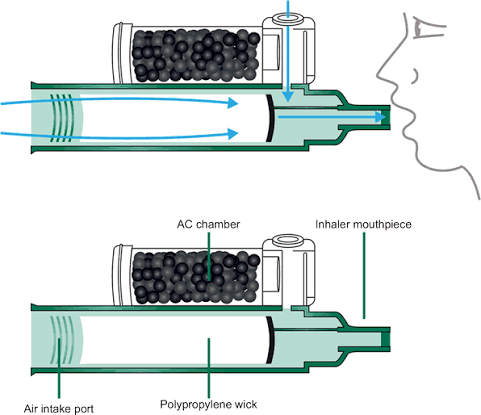
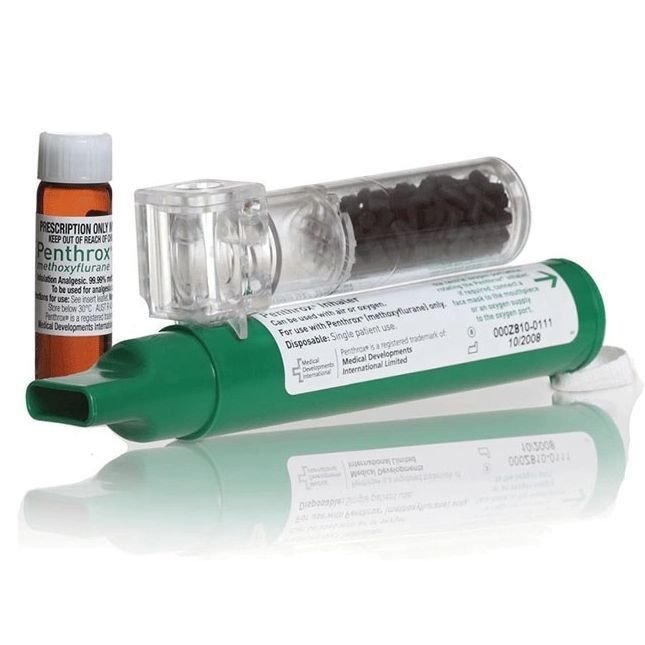
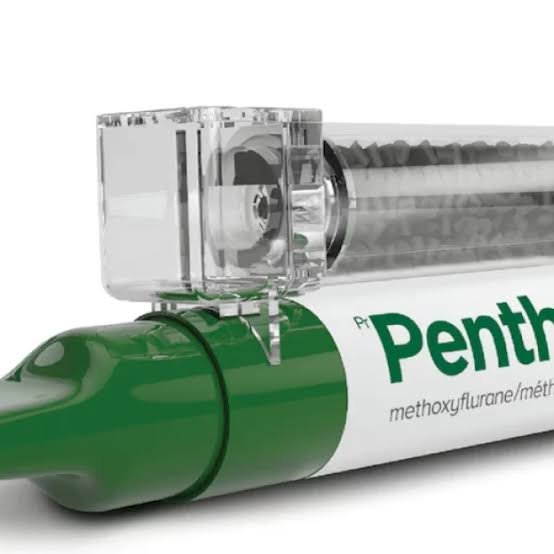
Before breaking down the five specific benefits, it helps to understand what’s actually inside the device. Penthrox is a portable, lightweight, noninvasive inhaler for self-administration, built around three core components: the inhaler itself (the “green whistle”), an activated carbon chamber, and a 3 mL bottle of 99.9% methoxyflurane. The unique characteristics of methoxyflurane — including noninvasive administration, rapid onset of action, a short half-life, and portability — are exactly what make it a favoured option for acute pain management across paramedic services, outpatient care, and emergency departments.
This combination of properties is precisely why the fast-acting Penthrox inhaler for emergency pain management has become the term clinicians and patients search for: it’s not just “fast” in a general sense, it’s fast in the specific ways that matter during a medical emergency.
The 5 Things Doctors Love About the Fast-Acting Penthrox Inhaler for Emergency Pain Management
1. Rapid Onset of Action: The Core of the Fast-Acting Penthrox Inhaler for Emergency Pain Management
Speed is the single biggest reason the fast-acting Penthrox inhaler for emergency pain management earns its name. According to pharmacological review data, methoxyflurane delivers rapid onset analgesia with peak effect at 15 minutes, achieving a mean pain reduction of 18.5 mm on the visual analog scale compared to placebo, with pain relief significant at all time points from 5 to 20 minutes after initiation.
The InMEDIATE trial, a randomized controlled study conducted in Spanish emergency departments, directly compared methoxyflurane to standard analgesic treatment and found it provided greater analgesia and faster onset of action in trauma patients. This is reinforced by prehospital research, where methoxyflurane was found to be superior in efficacy, speed of onset, and ease of administration when directly compared to intramuscular tramadol, although it carried slightly more minor side effects.
For emergency clinicians, that speed difference is clinically meaningful — every additional minute of moderate-to-severe pain affects patient distress, vital signs, and how easily a clinical exam or transport can proceed.

2. True Self-Administration
The second reason doctors favor the fast-acting Penthrox inhaler for emergency pain management is that it removes a major bottleneck in emergency care: staff time. Penthrox is self-administered via a hand-held inhaler containing 3 mL of methoxyflurane, allowing patients to control their own analgesia under healthcare provider supervision, rather than requiring a clinician to continually titrate and monitor an IV drug.
This matters most in resource-constrained settings. As one systematic review protocol notes, methoxyflurane could help minimise oligoanalgesia — the under-treatment of pain — in the emergency department, because it faces fewer administration barriers compared to medications like nitrous oxide, opioids, or ketamine, all of which typically demand closer staff supervision. In the ambulance, on a hospital ward, or in an outpatient clinic, a patient who can manage their own dosing frees up clinical staff to focus on other urgent tasks, while still receiving effective analgesia.
3. A Lower Side-Effect Profile Than Opioids or General Anaesthesia
Safety is consistently cited as a defining feature of the fast-acting Penthrox inhaler for emergency pain management. Multiple large studies report no clinically significant effect on systolic blood pressure, pulse rate, respiratory rate, or consciousness levels, and there have been no reports of nephrotoxicity or hepatotoxicity in clinical studies of analgesic-dose methoxyflurane. The most common adverse events are mild and transient — typically dizziness and somnolence — a much gentler profile than the respiratory depression risk associated with opioids or the recovery burden of general anaesthesia.
This safety margin is also dose-engineered. The maximum recommended analgesic dose of 6 mL per day, or 15 mL per week, results in an exposure level that maintains a wide safety margin below the threshold historically linked to toxicity at the much higher doses once used for general anaesthesia in the 1960s. In other words, the dose used for pain relief today is a small fraction of what was once used for surgical anaesthesia — which is exactly why the side-effect profile is so different.

4. No IV Required
For both patients and clinicians, avoiding a needle is a real benefit — and it’s a major reason emergency teams reach for the fast-acting Penthrox inhaler for emergency pain management in the field. Penthrox is specifically recommended in situations where IV access is lacking or difficult to establish, offering a practical, non-invasive alternative to IV morphine titration.
This is especially valuable in pre-hospital and trauma settings, where establishing IV access can be slow, painful, or technically difficult depending on the patient’s condition, injury location, or vein accessibility. Painful outpatient procedures normally require conventional sedation, which requires a trained healthcare worker to administer sedative agents and monitor for complications such as excessively deep sedation, loss of airway control, or impaired cardiovascular function — all risks that a self-administered inhaler avoids entirely.
Beyond trauma, this no-IV advantage extends to outpatient procedures. Urological office procedures such as prostatic biopsies and minimally invasive surgical therapies increasingly use methoxyflurane as part of multimodal analgesia, precisely because it avoids the need for IV lines in a quick, in-clinic setting.
5. 25–60 Minute Relief Duration, Matched to the Procedure
The final reason the fast-acting Penthrox inhaler for emergency pain management works so well in practice is that its duration is flexible and patient-controlled. One inhaler containing 3 mL of methoxyflurane provides 25–30 minutes of analgesia with continuous use; used intermittently, that same vial can extend pain relief to around 54 minutes, according to data from the STOP! study. If more time is needed, a second vial can be added — up to a maximum of 6 mL (two vials) in a single day, or 15 mL (five vials) per week.
This dosing flexibility means the device can be matched to short procedures (a single 25-minute vial) or longer transport and assessment windows (intermittent use stretching close to an hour), without over-medicating the patient. It’s a level of titration control that few other rapid analgesics offer in a self-administered format.
Where the Fast-Acting Penthrox Inhaler for Emergency Pain Management Is Used
The clinical use cases for the fast-acting Penthrox inhaler for emergency pain management span several settings, supported directly by published guidance:
- Trauma-related acute pain in the pre-hospital setting, emergency departments, and during minor outpatient procedures where rapid analgesia is needed.
- Situations where IV access is lacking or difficult to establish, as a practical non-invasive alternative to IV morphine titration.
- Minor trauma and musculoskeletal injuries requiring immediate pain relief, with documented superiority over intramuscular tramadol for onset of action.
- Urological office procedures, such as prostatic biopsies and minimally invasive surgical therapies, as part of multimodal analgesia.
Penthrox is approved by Health Canada, licensed across Europe, Latin America, and South Africa for emergency relief of moderate-to-severe trauma pain, and has been used in Australia and New Zealand since the 1970s, giving it more than 40 years of accumulated real-world clinical use as an analgesic.
Fast-Acting Penthrox Inhaler for Emergency Pain Management vs. Other Options
| Factor | Fast-Acting Penthrox Inhaler | IV Morphine | IM Tramadol | General Anaesthesia |
|---|---|---|---|---|
| Onset of pain relief | Minutes; peak effect ~15 min | Faster but requires IV access | Slower onset than methoxyflurane | N/A — for sedation, not analgesia |
| Administration | Self-administered, patient-controlled | Requires IV line + clinician titration | IM injection by clinician | Requires trained anaesthetist, monitoring |
| IV access needed | No | Yes | No | Yes (typically) |
| Common side effects | Mild, transient dizziness/somnolence | Respiratory depression risk, sedation | More side effects than methoxyflurane in some studies | Recovery time, airway risk |
| Duration per dose | 25–60 minutes (dose-dependent) | Variable, requires re-dosing | Variable | N/A |
This comparison is exactly why so many emergency protocols and outpatient clinics now default to the fast-acting Penthrox inhaler for emergency pain management as a first-line option before escalating to IV-based approaches.
Safety Considerations and Contraindications for the Fast-Acting Penthrox Inhaler for Emergency Pain Management
No analgesic is appropriate for every patient, and the fast-acting Penthrox inhaler for emergency pain management is no exception. Clinical guidance flags a few important precautions:
- Drug interactions: Concurrent use with tetracycline antibiotics, such as minocycline or doxycycline, should be avoided due to potential drug interactions.
- CNS depressants: Caution is advised with other central nervous system depressants, as methoxyflurane may potentiate sedative effects.
- Elderly patients: Require careful monitoring due to potentially decreased renal function, although the low analgesic doses used are not associated with the nephrotoxicity seen at historical, much higher anaesthetic doses.
This is exactly why Penthrox, despite being self-administered, is supplied only under medical supervision and by prescription. If you’re considering the fast-acting Penthrox inhaler for emergency pain management for yourself or a family member ahead of a planned procedure, the right first step is a conversation with a qualified pharmacist or prescriber — not a self-directed purchase. The team at The Pharmacy Meds can advise on prescription access and suitability.
For readers who also want to understand patient-reported outcomes and satisfaction data behind this device, our companion article on buy Penthrox Green Whistle patient reviews covers real-world satisfaction rates across trauma, hysteroscopy, and procedural pain settings.
Frequently Asked Questions About the Fast-Acting Penthrox Inhaler for Emergency Pain Management
How fast does the Penthrox inhaler work?
Very fast. Methoxyflurane delivers rapid onset analgesia with peak effect at around 15 minutes, and pain relief is significant at all time points between 5 and 20 minutes after the patient starts inhaling. This is what makes it a true fast-acting Penthrox inhaler for emergency pain management rather than a delayed-onset option.
Is the Penthrox inhaler safe?
Yes, at the low doses used for analgesia. Studies report no clinically significant effect on blood pressure, pulse, respiratory rate, or consciousness, and no reports of nephrotoxicity or hepatotoxicity at analgesic doses. The most common side effects — dizziness and somnolence — are mild and temporary. It does carry some drug interaction precautions, such as avoiding concurrent tetracycline antibiotics, which is why it remains a prescription-only medicine.
Do I need an IV to use Penthrox?
No — that’s one of its defining advantages. The fast-acting Penthrox inhaler for emergency pain management is specifically used in situations where IV access is lacking or difficult to establish, offering a non-invasive alternative to IV morphine titration.
How long does one dose of Penthrox last?
A single 3 mL vial provides 25–30 minutes of pain relief with continuous use, or up to around 54–60 minutes with intermittent inhalation. A second vial can be added if needed, up to a maximum of 6 mL in 24 hours.
Can patients really administer Penthrox themselves?
Yes. It is specifically designed for self-administration via a hand-held inhaler, allowing patients to control their own analgesia under the supervision of a healthcare provider — they don’t need a clinician to continuously manage dosing the way they would with an IV infusion.
What is Penthrox used for besides trauma?
Beyond emergency trauma pain, the fast-acting Penthrox inhaler for emergency pain management is also used for minor outpatient procedures, including urological office procedures such as prostatic biopsies, as well as other minimally invasive interventions, typically as part of a multimodal analgesia plan.
Where can I learn more about methoxyflurane, the drug inside Penthrox?
For an independent overview of methoxyflurane’s history, pharmacology, and regulatory status, see the Wikipedia entry on methoxyflurane. For prescription access and professional guidance specific to your situation, visit The Pharmacy Meds.
Key Takeaways
- The fast-acting Penthrox inhaler for emergency pain management earns its reputation through five specific, evidence-backed benefits: rapid onset (~15 min peak effect), true self-administration, a low side-effect profile, no IV requirement, and a flexible 25–60 minute relief window.
- Clinical trials, including InMEDIATE and prehospital tramadol comparisons, confirm faster onset and strong efficacy versus standard alternatives.
- It’s approved in 30+ countries and has over 40 years of real-world use in Australia and New Zealand alone.
- It remains a prescription-only medicine with specific contraindications (notably tetracycline antibiotics), so professional guidance is essential — speak to a pharmacist such as the team at The Pharmacy Meds before use.
- For independent pharmacological background, see the Wikipedia page on methoxyflurane.