
Acute pain doesn’t wait for an IV line. Whether it’s a fractured ankle on a hiking trail, a dislocated shoulder at a rugby match, or a patient screaming in a hospital corridor, the first few minutes after an injury are the most painful — and historically, the hardest to treat quickly. That’s the exact problem the Penthrox inhaler was built to solve.
So, how fast does Penthrox green whistle work for acute pain, really? Is “5-minute pain relief” a marketing claim or a clinically proven fact? In this guide, we break down the pharmacology, walk through head-to-head trial data against fentanyl and morphine, and answer the questions real patients and clinicians are asking — backed by citations from peer-reviewed journals, ClinicalTrials.gov, and the Wikipedia entry on methoxyflurane, the active drug inside Penthrox.
If you’re researching pain management options before a procedure, or you’re simply trying to understand how fast does Penthrox green whistle work for acute pain compared to standard hospital analgesics, this is the most data-backed breakdown you’ll find.
What Is Penthrox (The Green Whistle)?
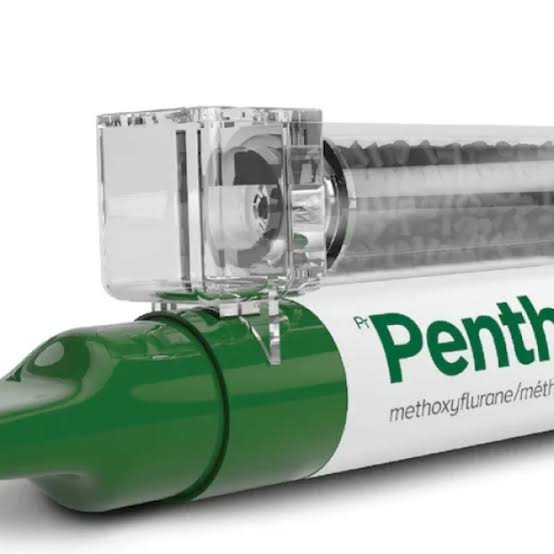
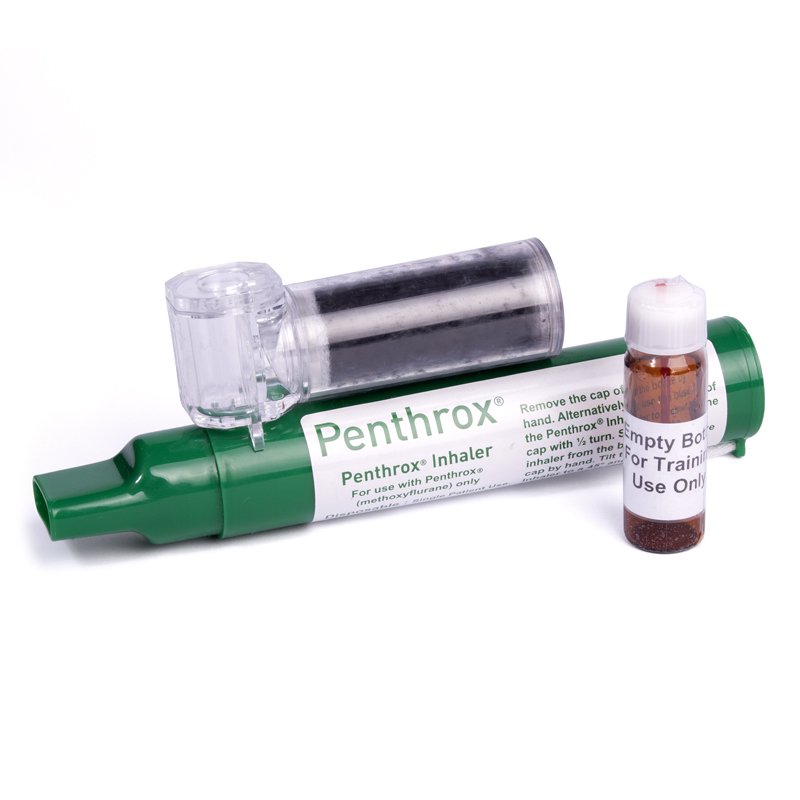
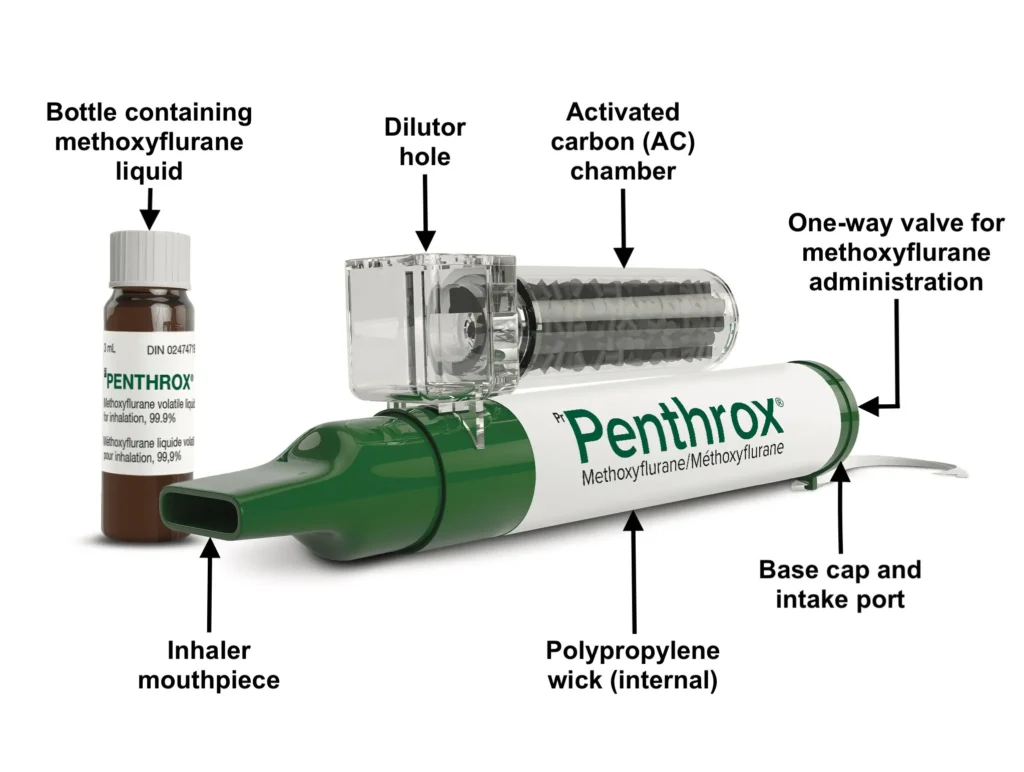
Penthrox is the brand name for low-dose methoxyflurane, a volatile, fluorinated inhalational analgesic delivered through a small, portable, handheld inhaler. Patients hold the device — commonly nicknamed the “green whistle” because of its shape and color — and self-administer it by breathing in through the mouthpiece.
The device has three parts:
- The inhaler body (“the whistle” or mouthpiece)
- An activated carbon chamber, which absorbs exhaled vapor so bystanders and staff aren’t exposed
- A 3 mL bottle of 99.9% methoxyflurane, which the patient inhales in titrated breaths
Unlike an injection, there’s no needle, no IV line, and no waiting for a nurse or paramedic to find a vein. The patient controls their own dosing by how deeply and how often they inhale — which is part of why the answer to how fast does Penthrox green whistle work for acute pain is measured in single-digit minutes rather than the 15–30 minutes typical of oral or even some intravenous options.
Methoxyflurane was originally developed decades ago as a general anesthetic gas, but it fell out of favor for that use after links to kidney and liver toxicity at high, prolonged doses. Today’s Penthrox formulation uses a much lower dose, for much shorter durations, specifically for short-term acute pain — a very different risk profile from its anesthetic-era use. You can read more about the compound’s pharmacological history on Wikipedia’s methoxyflurane page.
How Fast Does Penthrox Green Whistle Work for Acute Pain? The Core Answer
This is the question most people searching for Penthrox actually want answered, so let’s be direct.
Across multiple clinical trials and emergency medicine reviews, how fast does Penthrox green whistle work for acute pain comes down to this: meaningful pain relief typically begins within 6 to 10 inhalations, which usually translates to under 60 seconds to about 5 minutes from the first breath. Methoxyflurane has a rapid onset of action, providing a clinically meaningful drop on the Visual Analogue Scale for pain in less than 60 seconds, with pain relief generally occurring within 6 to 10 inhalations.
A separate randomized controlled trial published in a leading emergency medicine journal confirmed this window in real trauma patients, noting that low-dose methoxyflurane analgesia is intended for short-term pain relief in the emergency setting, is portable, nonnarcotic, and provides rapid pain relief within four to five minutes, with effects that reverse quickly once inhalation stops.how fast does Penthrox green whistle work for acute pain
In short:
- First noticeable relief: often under 60 seconds
- Significant pain score reduction: within 4–5 minutes
- Peak/plateau effect: generally by the 5–10 minute mark
- Duration of a single 3 mL dose: up to 25–30 minutes of continuous inhalation, longer with intermittent breathing
This is precisely why so many clinicians and patients ask how fast does Penthrox green whistle work for acute pain before opting for it over an injectable opioid — the answer is fast enough to matter in the exact window where pain is at its worst: the first few minutes after injury, before stabilization, splinting, or transport.
How fast does Penthrox green whistle work for acute pain at the pharmacological level?
The speed comes down to basic pharmacology. Because methoxyflurane is inhaled directly into the lungs, it bypasses the slower absorption pathways of oral medication (which has to pass through the gut and liver first) and even avoids the delay of finding a vein for an IV. The lungs offer an enormous surface area for rapid absorption into the bloodstream, which is the underlying reason onset is measured in seconds rather than minutes.
Additionally, because the patient self-titrates — taking breaths only as needed — the onset is felt almost as soon as inhalation begins, rather than waiting for a full dose to be administered before any effect kicks in.how fast does Penthrox green whistle work for acute pain
Penthrox vs. Fentanyl vs. Morphine: What the Real Studies Show
Marketing claims are one thing. Independent, peer-reviewed, head-to-head trials are another. Below is a breakdown of the most credible comparative data available as of 2026.
The PreMeFen Trial (2025) — The Largest Three-Way Comparison
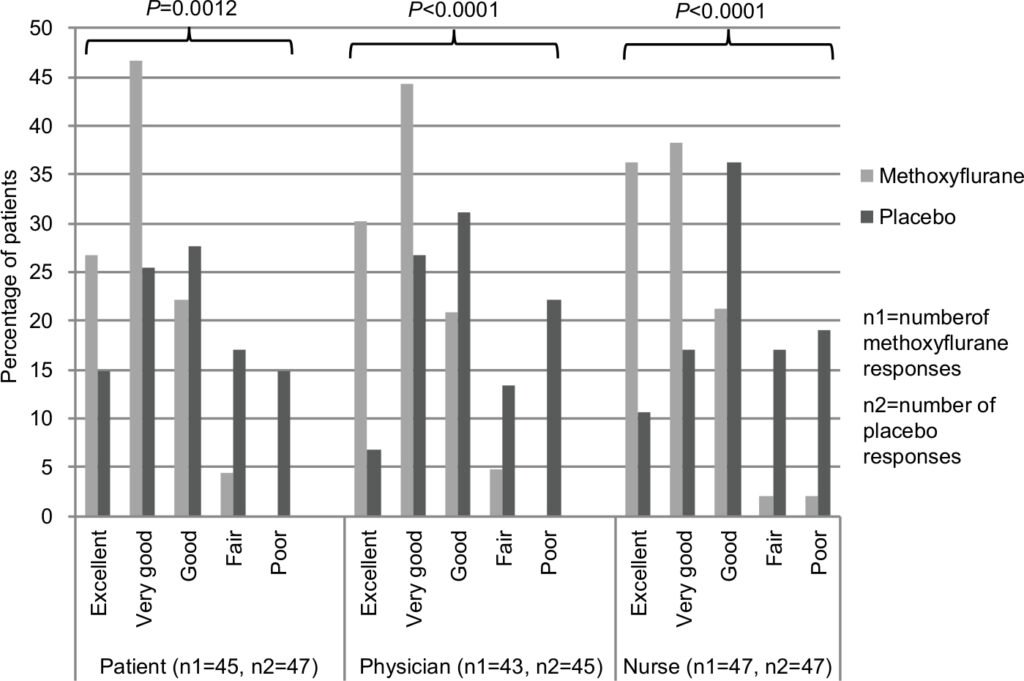
The most rigorous recent answer to how fast does Penthrox green whistle work for acute pain relative to standard opioids comes from the PreMeFen trial, a randomized, open-label, non-inferiority, three-arm phase 3 study conducted across the Norwegian ground ambulance service.
Researchers randomly assigned 338 patients with moderate-to-severe acute pain to receive inhaled methoxyflurane, intranasal fentanyl, or intravenous morphine. Comparing changes in mean pain scores while adjusting for baseline showed that methoxyflurane was non-inferior to both fentanyl and morphine, while intranasal fentanyl itself failed to reach non-inferiority compared with morphine at the 10-minute mark.how fast does Penthrox green whistle work for acute pain
The raw numbers are striking. Average pain score reductions at 10 minutes were 3.31 points for methoxyflurane, versus 1.98 points for fentanyl and 2.74 points for morphine, on an 11-point scale, from a starting average baseline pain score of 7.6.
In plain terms: in this trial, the inhaled green whistle reduced pain faster and by a greater margin at the 10-minute checkpoint than either intranasal fentanyl or IV morphine — without needing a needle or vein access. This single trial is one of the strongest pieces of evidence available for answering how fast does Penthrox green whistle work for acute pain versus the two most common opioid alternatives used in hospitals and ambulances today.
The Fabbri Systematic Review — Ultra-Short-Term Pain Windows
For pain measured in the very first minutes (5, 10, or 15 minutes after treatment), a systematic review by Fabbri and colleagues out of Italy reached a similar conclusion. According to an emergency medicine discussion of the review, for ultra-short-term pain relief in the 5-, 10-, and 15-minute windows, inhaled methoxyflurane was found to be equal to or even superior to standard of care, primarily parenteral opioids, with a strong safety profile.how fast does Penthrox green whistle work for acute pain
That review also flagged an interesting demographic pattern: geriatric patients appeared to respond even more favorably to methoxyflurane, with greater changes in pain score compared with younger adults. This matters for hospitals and ambulance services treating older adults with hip fractures or fragility injuries, where fast, non-invasive pain control is especially valuable.
Older Retrospective Data: A More Cautious Picture
Not every study shows methoxyflurane outperforming opioids outright. An earlier retrospective comparative study from the Ambulance Service of New South Wales, which looked at real-world paramedic-administered analgesia, found a more nuanced result. The study concluded that inhaled methoxyflurane, intranasal fentanyl, and IV morphine were all effective analgesic agents in the out-of-hospital setting, but that morphine and fentanyl were significantly more effective overall than methoxyflurane, with morphine appearing somewhat more effective than intranasal fentanyl.
This older dataset is a useful reality check: Penthrox’s main advantage isn’t necessarily that it’s the strongest analgesic milligram-for-milligram — it’s that it works fast, requires no IV, and carries a different (generally favorable) safety profile. When people search how fast does Penthrox green whistle work for acute pain, speed and convenience — not raw potency — are usually the actual selling point, and the data backs that framing.
Equi-Analgesic Dosing vs. Fentanyl
A randomized, double-blind, placebo-controlled crossover study in healthy volunteers, using the cold pressor pain test, looked specifically at dose-matching methoxyflurane against IV fentanyl. The researchers noted that both inhaled methoxyflurane and intravenous fentanyl have an onset of action within minutes, with an analgesic effect lasting roughly 20 to 30 minutes. This confirms that — onset-wise — Penthrox is genuinely competitive with one of the fastest-acting opioids used in modern medicine.how fast does Penthrox green whistle work for acute pain
Comparison Table: Onset and Duration at a Glance
| Analgesic | Typical Onset | Duration of Effect | Route |
|---|---|---|---|
| Penthrox (methoxyflurane) | Under 60 seconds–5 minutes | Up to 25–30 minutes (continuous); longer if intermittent | Inhaled, self-administered |
| Intranasal fentanyl | 2–5 minutes | 30–60 minutes | Nasal spray |
| IV morphine | 1–2 minutes (peak 5–15 min) | 3–4 hours | Intravenous injection |
| IV fentanyl | Under 60 seconds (peak 2–5 min) | 30–60 minutes | Intravenous injection |
Sources: emergency department trauma trial data, comparative IV morphine/fentanyl trauma research, and equi-analgesic crossover study findings.
This table is a quick-reference way to answer how fast does Penthrox green whistle work for acute pain next to the two most common opioid comparators — and it shows why ambulance services and emergency departments increasingly stock it as a first-line option before IV access is even established.
Real-World Use: Where Speed Actually Matters
Understanding how fast does Penthrox green whistle work for acute pain matters most in settings where every minute counts and IV access isn’t immediately available.
Pre-Hospital and Ambulance Care
Paramedics are often the first to treat a patient after a car accident, fall, or sports injury — frequently in a moving vehicle, on a roadside, or in a remote location. In emergency settings, NSAIDs and opioids are typically given by intravenous or intramuscular routes specifically because they offer faster onset for rapid pain relief, but injections are invasive and can be distressing for patients. Penthrox offers a needle-free alternative with a comparable or better speed profile.
Wilderness and Remote Medicine
Because Penthrox needs no refrigeration, no IV setup, and no trained venipuncture skill, it has found a niche in austere environments. One field study evaluated its use at high altitude — in Machermo, Nepal, at 4,470 meters — during a procedure for urinary retention, and the authors concluded that methoxyflurane provided rapid, effective analgesia for both visceral and procedural pain in that remote, high-altitude setting.
Emergency Departments
In hospital emergency departments, Penthrox is increasingly used as a bridging analgesic — something to control pain immediately while staff prepare a more durable treatment plan. The unique characteristics of methoxyflurane, including noninvasive administration, rapid onset of action, short half-life, and portability, make it a favourable option for acute pain management across paramedic services, outpatient care, and emergency departments.how fast does Penthrox green whistle work for acute pain
Minor Procedures and Outpatient Settings
Penthrox isn’t only for trauma. A 2024 systematic review examining its use for elective, outpatient interventional procedures found that its analgesic and anxiolytic properties have a quick onset of action with minimal impact on cardiorespiratory observations and recovery times, giving it potential to increase the efficiency of health services by facilitating outpatient procedures. This includes uses such as IUD insertions, joint reductions, wound debridement, and burn dressing changes — all situations where clinicians need the patient comfortable within minutes, not after a 20-minute wait for oral medication to kick in.
Safety Profile: What You Should Know
No discussion of speed is complete without a safety check. Methoxyflurane’s history as a general anesthetic agent included reports of toxicity, but that was at much higher, repeated, or prolonged doses than the low-dose, short-duration regimen used in Penthrox today.
According to its Wikipedia entry, methoxyflurane is sold under the brand name Penthrox, known as the “green whistle,” and is an inhaled medication primarily used to reduce pain following an injury or to reduce pain associated with minor medical procedures; onset of pain relief is rapid, and a standard dose typically lasts up to 30 minutes, with use only recommended under direct medical supervision. Common side effects include anxiety, headache, sleepiness, cough, and nausea.
Because of the historical link between methoxyflurane and kidney/liver effects at high cumulative doses, Penthrox is typically restricted to occasional, short-term use, and patients with significant pre-existing kidney disease are generally advised against repeated use. Always discuss your full medical history with a treating clinician or pharmacist before use — this article is educational and is not a substitute for individualized medical advice.how fast does Penthrox green whistle work for acute pain
If you want a deeper look at dosing safety, drug interactions, or how Penthrox fits alongside other pain medications you may already be taking, the pharmacist team at The Pharmacy Meds can walk you through your specific situation and any prescription interactions worth flagging before your next procedure.
Penthrox vs. Other Pain Relief Options: Choosing What’s Right for You
If you’re comparing options ahead of a planned procedure, a sports injury follow-up, or simply want to understand your choices, it helps to think about three variables: speed, invasiveness, and duration.
- Need pain control in seconds to minutes, with no needle? Penthrox is built exactly for this.
- Need several hours of sustained pain control after major surgery? IV morphine’s multi-hour duration may be more appropriate, despite the slightly longer onset.
- Need something between the two, with nasal rather than IV delivery? Intranasal fentanyl offers a middle ground, though the PreMeFen data above suggests it may be slower to take full effect than either Penthrox or IV morphine in the first 10 minutes.
For broader guidance on choosing or refilling acute pain medications, comparing over-the-counter options, or understanding how a prescribed analgesic interacts with medications you already take, you can browse the resource library at The Pharmacy Meds for additional, pharmacist-reviewed guidance.
Frequently Asked Questions
How fast does Penthrox green whistle work for acute pain?
Most patients notice initial pain relief within 6 to 10 inhalations — often under 60 seconds — with significant, measurable pain score reduction by the 4 to 5 minute mark. Clinical trial data describes rapid pain relief within four to five minutes, and a 2025 three-arm trial found a greater average pain score reduction with methoxyflurane than with either intranasal fentanyl or IV morphine at the 10-minute checkpoint. This is the single most well-documented answer to how fast does Penthrox green whistle work for acute pain across current clinical literature.
Is Penthrox faster than morphine?
In terms of onset, Penthrox is comparable to or faster than IV morphine in several trials. The 2025 PreMeFen trial found methoxyflurane produced a larger average pain score drop than morphine at 10 minutes post-treatment. Morphine’s duration of effect is much longer (several hours), while Penthrox’s effect typically tapers within 25–30 minutes, so the two serve different roles in pain management rather than being direct substitutes.
Is Penthrox safe to use repeatedly?
Penthrox is intended for occasional, short-term, self-limited use — not daily or chronic pain management. Because methoxyflurane was historically associated with kidney and liver effects at high cumulative doses, repeated use within a short period is generally avoided, and people with significant kidney impairment are typically advised against it. Always confirm suitability with a treating clinician.
What does Penthrox feel like when it starts working?
Patients commonly describe a sweet-smelling vapor, mild lightheadedness, and a noticeable softening of pain intensity within the first several breaths. Some people also feel mild euphoria or drowsiness, which resolves quickly once inhalation stops, since the drug clears the system rapidly.
Can Penthrox replace an opioid injection entirely?
Not always. While trial data shows Penthrox can match or exceed fentanyl and morphine in early-onset pain score reduction, older retrospective data found that morphine and fentanyl were, on balance, somewhat more effective analgesics overall than methoxyflurane in real-world paramedic use. Clinicians often choose between them based on injury severity, expected duration of pain, and whether IV access is already needed for other reasons.
How long does one Penthrox dose last?
A single 3 mL bottle, used with continuous inhalation, generally provides analgesic relief for up to 25–30 minutes. Intermittent inhalation, where the patient breathes in only as needed rather than continuously, can extend that relief window further, which is part of why clinicians often instruct patients to titrate their breathing rather than inhale constantly.
Why is it called the “green whistle”?
The nickname comes simply from the device’s shape (similar to a whistle or small horn) and its green color, both of which made it easy for emergency staff and patients in Australia — where it was developed and is widely used — to refer to it quickly without using the clinical name.
Where can I learn more about safe use alongside my current medications?
For a personalized review of how Penthrox or other acute pain treatments might interact with your current prescriptions, the pharmacist-reviewed guidance at The Pharmacy Meds is a useful starting point before your next appointment or procedure.
Key Takeaways
- How fast does Penthrox green whistle work for acute pain? Generally within 60 seconds to 5 minutes for noticeable relief, with peak effect by around 5–10 minutes.
- A 2025 randomized trial found methoxyflurane produced a larger average pain reduction at 10 minutes than both intranasal fentanyl and IV morphine.
- Earlier retrospective, real-world data suggests morphine and fentanyl may still edge out methoxyflurane in overall analgesic strength, even if Penthrox wins on speed and convenience.
- Penthrox requires no needle, no IV line, and is self-administered, making it well suited for ambulances, remote settings, EDs, and outpatient procedures.
- Like any medication, it has a defined safety profile and is intended for short-term, occasional use under medical guidance.
Understanding how fast does Penthrox green whistle work for acute pain isn’t just a clinical curiosity — it’s a practical question that affects real decisions in ambulances, emergency rooms, and outpatient clinics every day. The data consistently points to one conclusion: when minutes matter, Penthrox is one of the fastest non-invasive options currently available.
For more pharmacist-reviewed pain management content, visit The Pharmacy Meds.